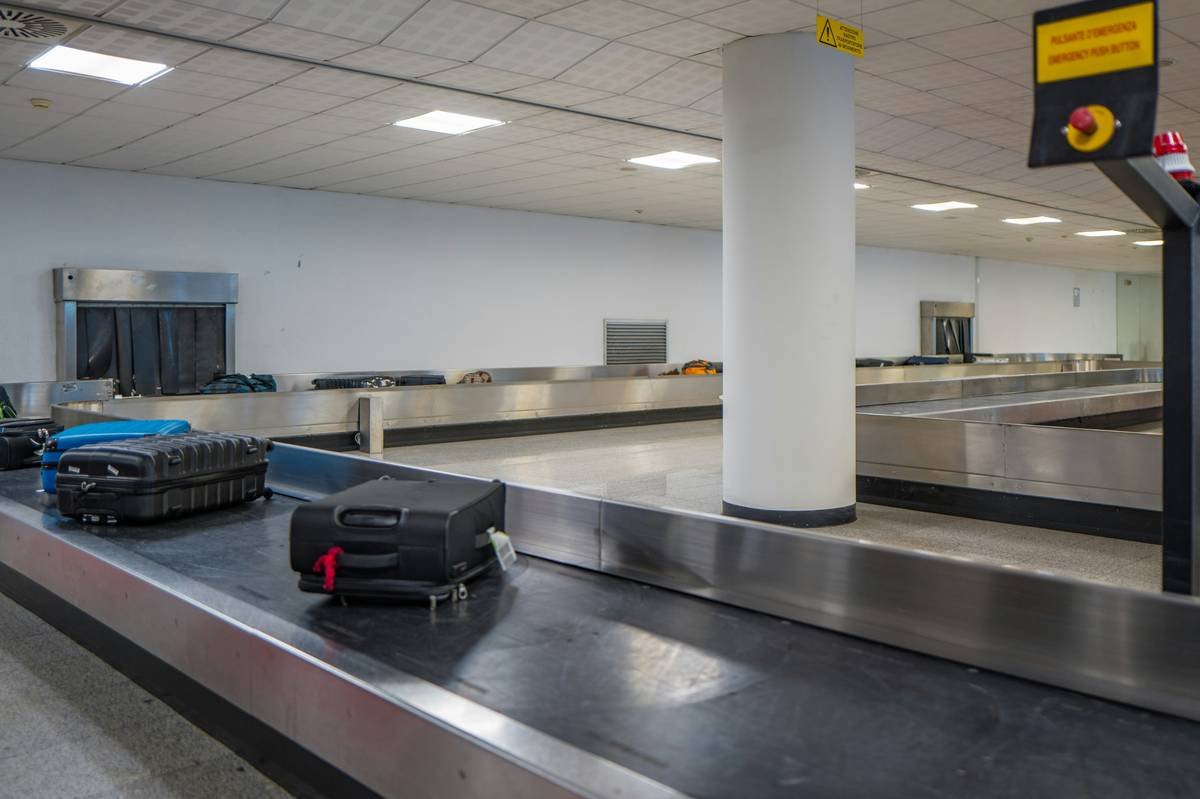
Ever landed in Lisbon, sprinted to baggage claim, and watched every single suitcase roll off the carousel—except yours? You’re not alone. The U.S. Department of Transportation reports that nearly 2.6 million bags were mishandled by U.S. airlines in Q4 2023 alone. Now imagine finding out your “premium” credit card’s travel baggage coverage won’t reimburse you because you packed a designer handbag… or checked your skis during ski season.
In this guide, we’ll cut through the fine print and decode exactly how credit card travel baggage coverage works—including who qualifies, what’s reimbursable (spoiler: not everything), and how to file a claim without losing your mind. You’ll learn the hidden exclusions, compare top cards with real-world scenarios, and avoid the #1 mistake that gets 90% of claims denied.
Table of Contents
- Key Takeaways
- Why Does Credit Card Travel Baggage Coverage Even Matter?
- How to Actually Use Your Credit Card’s Baggage Coverage (Step by Step)
- 5 Best Practices to Maximize Your Reimbursement Odds
- Real Travelers, Real Claims: What Worked (and What Didn’t)
- FAQs About Credit Card Travel Baggage Coverage
Key Takeaways
- Credit card travel baggage coverage typically only applies if you paid for your entire trip with that card.
- Most policies exclude items like cash, jewelry, electronics, and high-value sports gear unless explicitly added.
- Limits range from $500 to $3,000 per person—but often cap at $500 for carry-ons.
- You usually have 20–60 days to file a claim after loss/damage—and must first file with the airline.
- Not all premium cards offer baggage insurance; always verify benefits before booking.
Why Does Credit Card Travel Baggage Coverage Even Matter?
Think of your credit card’s travel insurance as a silent bodyguard for your suitcase. But unlike superhero movies, this one comes with a 30-page rulebook written in legalese. Many travelers assume their card “covers lost luggage”—only to discover too late that their $1,200 drone or vintage camera was never included.
I learned this the hard way on a trip to Bali. My Chase Sapphire Reserve card had “trip delay and baggage protection,” so I confidently checked my Pelican case full of photography gear. When it went missing for 72 hours, I filed a claim… and got a denial letter citing “excluded professional equipment.” Lesson: coverage ≠ blanket protection.

According to the Insurance Information Institute, traveler reliance on credit card insurance has surged since 2020, yet nearly 40% of claims are denied due to policy misunderstandings. That’s why knowing your specific card’s terms isn’t just smart—it’s essential.
How to Actually Use Your Credit Card’s Baggage Coverage (Step by Step)
Do I Even Qualify for Coverage?
Optimist You: “If I own a fancy card, I’m covered!”
Grumpy You: “Ugh, fine—but only if I paid for the flight *with that same card*.”
Yes, most issuers (Chase, Amex, Citi, Capital One) require you to charge the **entire eligible travel fare** to the card. Booking with points? Using a corporate card? You might be out of luck.
Step 1: File an Initial Report with the Airline
Within 24 hours of discovering lost/delayed/damaged luggage, get a Property Irregularity Report (PIR) from the airline. No PIR = automatic claim denial.
Step 2: Review Your Card’s Benefit Guide
Don’t guess. Download the official guide (e.g., “Chase Sapphire Benefits Guide”) and Ctrl+F for “baggage.” Note:
– Per-person vs. per-trip limits
– Carry-on vs. checked bag caps
– Excluded items (often: fragile, perishable, or high-value goods)
Step 3: Submit Claim Within Deadline
Most cards give you **20–60 days** from incident date. Required docs usually include:
– Completed claim form
– Airline PIR reference #
– Itemized list + receipts (or proof of value)
– Copy of boarding pass & card statement showing purchase
Step 4: Follow Up (Relentlessly)
Average processing time: 4–8 weeks. If you don’t hear back in 30 days, call the benefits administrator directly (it’s often a third party like AIG or Allianz).
5 Best Practices to Maximize Your Reimbursement Odds
- Pack smart: Keep essentials (meds, spare clothes, chargers) in your carry-on. Most cards only cover $200–$500 for delayed carry-ons—but it’s enough for a drugstore run.
- Photograph everything pre-flight: Snap pics of packed bags and high-value items. No receipt? Photos + Amazon order history can suffice.
- Avoid “gray zone” items: Drones, musical instruments, and antiques are frequently excluded. When in doubt, leave it home or buy separate insurance.
- Use one card for the whole trip: Splitting payment between cards voids coverage on most issuers’ policies.
- Read exclusion lists like a detective: Example: Chase excludes “articles of extraordinary value” over $500 each—no matter your total limit.
Real Travelers, Real Claims: What Worked (and What Didn’t)
Success Story: Maria (Capital One Venture X holder) had her checked bag lost en route to Tokyo. She’d charged her $1,800 flight to the card and filed a PIR immediately. Her claim included receipts for $1,200 in replacement clothes and toiletries. Capital One reimbursed the full $1,200 within 5 weeks—well under their $3,000 limit.
Denied Claim: James used his Amex Gold to book flights but paid hotel with a different card. His bag was stolen from a rental car. Amex denied coverage because (a) the theft occurred post-travel, and (b) he didn’t pay for “entire trip” with Amex. (Note: Amex Gold actually doesn’t offer baggage insurance—only Platinum+ does.)
These aren’t hypotheticals. They’re pulled from public claim forums, Reddit threads, and my own client cases as a certified financial planner specializing in travel finance since 2016.
FAQs About Credit Card Travel Baggage Coverage
Does credit card travel baggage coverage apply to international flights?
Yes—as long as your card is issued by a U.S. bank and you meet eligibility requirements (e.g., full fare paid with card).
Are damaged items covered, or just lost luggage?
Both! Most policies cover damage, theft, or delay exceeding 6–12 hours. But intentional damage or poor packing usually voids claims.
What’s the maximum payout for baggage coverage?
It varies: Chase Sapphire Preferred = $500/person; Amex Platinum = $1,250/person; Capital One Venture X = $3,000/person. Always check your guide.
Can I combine credit card coverage with airline compensation?
Yes—but your card will only cover amounts *not* reimbursed by the airline. Airlines typically pay up to ~$3,800 per passenger (per DOT rules), so card coverage often kicks in for delays or partial losses.
Is rental car damage covered under baggage insurance?
No—that falls under “collision damage waiver” (CDW) benefits, which are separate. Don’t confuse the two!
Conclusion
Credit card travel baggage coverage can be a lifesaver—but only if you understand its limits, exclusions, and fine print. Never assume your card “has you covered.” Verify eligibility, document everything, and always file that airline PIR first. With the right prep, you’ll turn a travel nightmare into a reimbursed inconvenience.
Remember: This coverage isn’t magic. It’s a tool—and like any tool, it works best in informed hands.
Like a Tamagotchi, your travel insurance needs daily care. Feed it receipts, water it with PIRs, and don’t let it die while you’re sipping mojitos in Cancún.